Brest Day Trip from Roscoff: Complete 2026 Guide

A Brest day trip from Roscoff takes you to France’s westernmost city — finis terrae, the end of the earth, as the Romans called this far Atlantic corner of Gaul, which is what Finistère itself means — and the Atlantic headquarters of the French Navy — 55 minutes south on toll-free roads, a world apart in character from the ferry port. Brest is not a pretty city in the conventional sense. It was reduced to rubble in the Allied bombing of August 1944, when over 80% of the urban fabric was destroyed in one of the most intensive bombing campaigns of the Western Front. What was rebuilt is mostly functional and unbeautiful. But Brest is extraordinary in other ways: it has one of the finest natural harbours on earth; a medieval château that survived the bombing and now contains France’s National Maritime Museum; and a panoramic harbour promenade built in 1769 by prison labour that offers one of the most dramatic urban views in France. It also has Océanopolis — the most important aquarium complex in Brittany and one of the finest centres for ocean science in Europe.

This is the most ambitious day trip from Roscoff in terms of distance — 60 kilometres each way — but the toll-free D58 and N12 make it fast and inexpensive. The journey alone, through the heart of Finistère and across the western reaches of Brittany to the sea, is worth making. And Océanopolis — 77 aquariums, an otter trail, the Cité des Océanautes discovery centre, and 4 botanical gardens in its current renovated form — is simply the most substantial and well-funded marine attraction between Plymouth and Paris.

This complete Brest day trip guide for 2026 covers everything: verified driving directions from Roscoff, the critically important Océanopolis renovation situation (Tropical and Polar pavilions currently closed, new discounted prices confirmed), the National Maritime Museum with 2026 prices and hours, the Cours Dajot promenade and its American Monument, the Pont de Recouvrance lift bridge, the Tour Tanguy, Rue de Siam, where to eat, sample itineraries for both full and half-day visits, and how to extend the day to the spectacular Crozon Peninsula.

Last updated: May 2026 | All admission prices, opening times and transport details verified from official sources

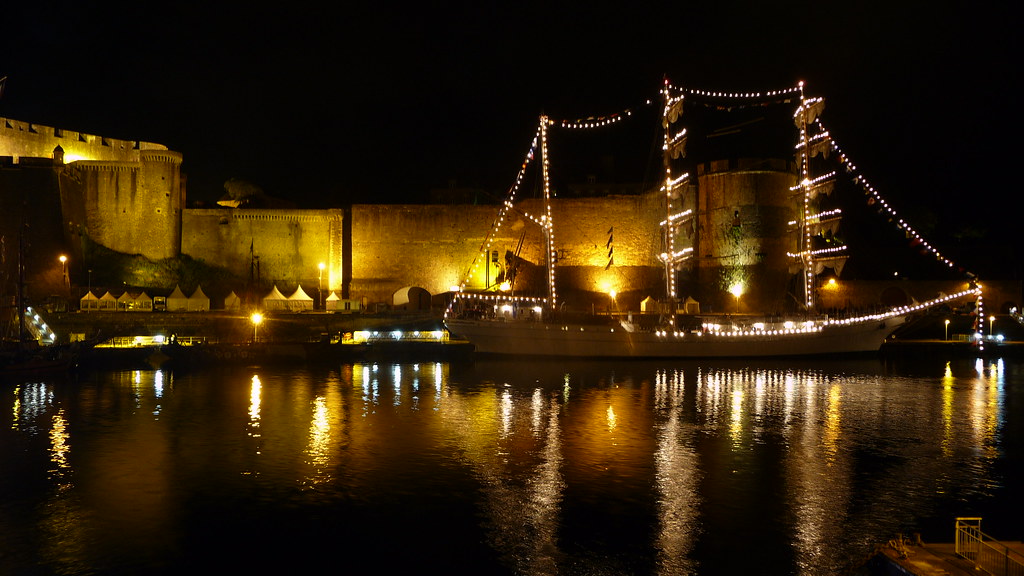
Brest day trip, Brest maritime festival at night

Brest: France’s Westernmost City

55 min from Roscoff | Océanopolis Aquarium (€14 adult, 2026) | Château de Brest Naval Museum (€7) | Cours Dajot Harbour Promenade (FREE) | French Navy Atlantic HQ

Book Plymouth to Roscoff with Brittany Ferries →

🐠 Brest at a Glance

55 min
Drive from
Roscoff
€14
Océanopolis
adult (2026)
€7
Naval Museum
adult (online)
Full day
Recommended
visit time
  • Océanopolis Aquarium — France’s most important aquarium complex: 77 aquariums, otter trail, Cité des Océanautes discovery centre and 4 botanical gardens. Adults €14 (2026 special rate during renovation — normally €22.90)
  • Château de Brest — National Maritime Museum — 1,700 years of history in France’s oldest continually occupied fortress. 400 years of French naval history. Adults €7 online (under-18s and EU residents 18-25 free)
  • Cours Dajot — 500-metre harbour promenade with panoramic views over the rade de Brest and the French naval fleet, FREE. One of the finest urban viewpoints in France
  • Pont de Recouvrance — 70-metre vertical lift bridge, once Europe’s largest, raising its 500-tonne span to allow French Navy ships through ~20 times a year
  • Tour Tanguy & Rue de Siam — 14th-century tower with FREE museum of old Brest, and the city’s main shopping street named after Siamese ambassadors sent to Louis XIV in 1686
  • Crozon Peninsula — Pointe de Pen-Hir — 40 minutes south of Brest: red-brown schist cliffs dropping 70 metres to the Atlantic, the Tas de Pois rock stacks offshore, and the most spectacular headland in Finistère — FREE
  • ⚠️Océanopolis Renovation Note: The Tropical and Polar pavilions are currently closed (Métamorphose project). Currently open: Brittany Pavilion, Otter Trail, Cité des Océanautes, Océanolab. Tropical pavilion due to reopen summer 2026. Discounted prices apply — see full details below.

Why Visit Brest?

Brest rewards visitors who are prepared to look beyond the post-war architecture to the extraordinary harbour, the maritime history, and one of France’s great scientific attractions.

A Naval City at the End of the Earth

Brest’s harbour — the Rade de Brest — is one of the finest natural anchorages in the world: a vast sheltered bay of 180 square kilometres, accessible through a narrow strait called the Goulet, with water deep enough to accommodate aircraft carriers at full draught. It has been the French Navy’s Atlantic base since Louis XIV’s military architect Vauban fortified it in the 17th century, and France’s naval Arsenal has operated continuously here since 1631. Standing on the Cours Dajot promenade above the commercial port and looking out across the roadstead — the grey shapes of naval vessels at anchor, the tankers and container ships coming through the Goulet, the Presqu’île de Crozon closing the western horizon — is an experience of genuine scale that few European harbour views can match.

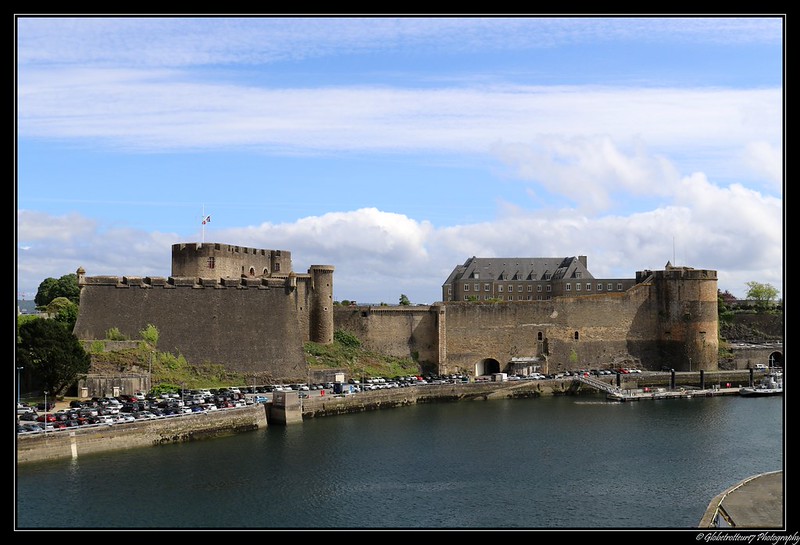
Brest was 80% destroyed in the Allied bombing of August 1944 — the city was a major German submarine base and the Allies had to eliminate it before the Normandy operation could advance. The bombing was effective but catastrophic for the city. What you see today is almost entirely post-war. The medieval château on its headland above the Penfeld mouth is the great exception — surviving the bombing almost entirely, as did parts of the quayside — and it is now one of Brittany’s most important historic sites.

Océanopolis: The Reason Most Families Come

Océanopolis is not just Brest’s leading tourist attraction — it is France’s most important centre for public ocean science, and one of the finest aquarium complexes in Europe. Its 77 aquariums hold over 10,000 animals and recreate marine environments from Brittany’s temperate coasts, the world’s tropical reefs, and the polar extremes of the Arctic and Antarctic. The Brittany Pavilion alone — the original pavilion, renovated in 2017 — is worth the visit for its extraordinary presentation of the species of Finistère’s coastline: seals, lobsters, seahorses, sardines, and a tank of jellyfish that is amongst the most beautiful displays in any European aquarium.

In 2026, Océanopolis is undergoing its Métamorphose — a €34 million renovation programme to completely redesign and expand the Tropical and Austral (formerly Polar) pavilions. This means the full three-pavilion experience is not currently available, but the Brittany Pavilion remains open, along with the new Cité des Océanautes family discovery centre, the Otter Trail, Océanolab, and four themed botanical gardens. Admission is discounted to reflect this. The Tropical Pavilion is expected to reopen in summer 2026, the Austral Pavilion in autumn 2026.

The Brest Maritime Festival — One of Europe’s Greatest Gatherings of Tall Ships

Every four years, Brest hosts the Fêtes Maritimes de Brest — one of the largest maritime festivals in the world and the event that defines the city’s relationship with the sea more than anything else. For four to five days, the Penfeld river, the Port de Commerce and the Rade de Brest fill with hundreds of traditional vessels from across Europe and beyond: tall ships, gaff-rigged cutters, Breton fishing boats, Norwegian wooden vessels, Portuguese caravels and working boats of every description. The quaysides become a continuous open-air exhibition of living maritime heritage, with concerts, sea shanties, traditional crafts, night-time illuminations and the extraordinary spectacle of the rade filled with sail.

The festival has been held since 1992 and has grown with each edition. The 2024 festival drew over 700,000 visitors over five days — the largest single tourist event in Brittany by some distance. Entry to the port areas is free. The atmosphere at night, with the tall ships illuminated against the château and the sound of music carrying across the rade, is genuinely extraordinary — it is the image that photograph above captures.

The next Brest Maritime Festival is in 2028. The festival runs every four years — 1992, 1996, 2000, 2004, 2008, 2012, 2016, 2020 (cancelled, Covid), 2024, 2028. If you are planning a Plymouth to Roscoff crossing in a festival year, it is worth timing your visit around it — the crossing from Plymouth takes you directly to the port nearest Brest, and the festival draws visitors from across Britain and northern Europe. Dates for 2028 have not yet been confirmed; check fest-maritime.bzh for announcements.

Getting to Brest from Roscoff

Brest is 60 kilometres south-west of Roscoff on toll-free roads — the longest drive of any day trip from the port, but straightforward and fast.

By Car — The Standard Route

Distance: ~60km | Drive time: ~55 minutes | Route: D58 south from Roscoff → Landerneau junction → N12/D712 west to Brest | Tolls: None — entirely toll-free throughout Brittany

Leave Port de Bloscon south on the D58 (the same road used for Morlaix). After Morlaix (~35 min) the road becomes dual carriageway heading west through Landerneau — follow signs for Brest. The drive is fast, the roads are good, and the final approach over the hills into the city gives the first glimpse of the Rade de Brest spread out below.

For Océanopolis: Follow signs to “Océanopolis” or “Port de Plaisance du Moulin Blanc” — free parking on site. GPS: Port de Plaisance du Moulin Blanc, 29200 Brest (east of city centre). For Château de Brest / Cours Dajot: Follow signs to “Centre-Ville” then “Château”. Paid parking opposite the château; free parking at Parc à Chaînes (~5 min walk).

Océanopolis and City Centre: Two Separate Locations

An important practical note: Océanopolis is at the Port de Plaisance du Moulin Blanc on the eastern edge of Brest — not in the city centre. The château, Cours Dajot, Rue de Siam and Tour Tanguy are in the city centre, 3–4km to the west. If you plan to visit both on the same day, allow travel time between the two (10–15 minutes by car or tram). The city tram stops at Océanopolis (Line 3, Palaren stop) and also connects to the city centre — a useful option if you prefer not to drive and park twice.

Océanopolis — Opening Hours & Admission 2026

Before visiting Océanopolis in 2026, read this section carefully. The attraction is open but operating at reduced capacity while its Métamorphose renovation project is completed.

⚠️ Océanopolis 2026: Métamorphose Renovation — What’s Open and What’s Closed

Currently CLOSED: Tropical Pavilion | Polar/Austral Pavilion

Currently OPEN: Brittany Pavilion | Otter Trail | Cité des Océanautes | Océanolab | 4 Botanical Gardens

Tropical Pavilion reopening: Summer 2026 | Austral Pavilion reopening: Autumn 2026

Admission is reduced to reflect the partial closure — see prices below. Confirmed from oceanopolis.com, last updated 10 March 2026. Always check oceanopolis.com before visiting.

Visitor type 2026 special rate (Métamorphose) Standard full price
Adults (18+) €14 €22.90
Young people 14–17 / Students €10.60 €17.50
Children (3–13 years) €9 €14.60
Under-3s FREE FREE
Disability (adult) €8.50

2026 Opening Hours & Practical Information

May–June 2026: Daily 09:30–18:00 (including bank holidays)

Closed: 1 January | Annual technical closure ~6 Jan–6 Feb | 25 December | Some Mondays outside school holidays in Mar, Sep, Oct, Nov, Dec

Address: Port de Plaisance du Moulin Blanc, 29200 Brest | Parking: FREE on site | Dogs: Not admitted | Tram: Line 3 to Palaren/Océanopolis stop | Book online at oceanopolis.com to avoid queues. Prices and hours verified from oceanopolis.com, updated 10 March 2026.

Océanopolis: What to See in 2026

Despite the partial closure, Océanopolis in its 2026 state offers a genuinely excellent half-day visit. Here is what remains open and what is worth your time.

🐟 Brittany Pavilion — Open

The original and most celebrated pavilion, fully renovated in 2017. Recreates the marine environments of Brittany’s Atlantic coast: grey seals in a 900,000-litre pool with an underwater viewing window; European lobsters; spiny spider crabs; seahorses; sardines; and a luminous jellyfish tank that stops every visitor in their tracks. Scientific mediators run regular public feeding sessions and guided encounters with the seals. The Minilab in the heart of the pavilion is an interactive discovery space with microscopes, underwater cameras and scientific workshops.

🦦 Otter Trail — Open

One of Océanopolis’s most popular attractions — a dedicated trail where visitors can compare the European otter and the North American sea otter side by side. Both are housed in semi-outdoor enclosures with underwater viewing, and public feeding sessions (several times daily) allow close observation of the keepers’ work. The contrast between the two species — European otters are solitary, shy, and streamlined; sea otters float on their backs and use tools — is genuinely fascinating and well-presented.

🌊 Cité des Océanautes — Open (NEW)

The newest addition to Océanopolis, opened as part of the Métamorphose project. An interactive discovery space designed for all ages — exploring ocean science through hands-on exhibits, digital installations, and guided activities. Children can operate simulated underwater vehicles, explore scale models of ocean habitats, and interact with live specimens in small display tanks. Scientific mediators are present throughout. A strong addition to the site even during the partial closure period.

🔬 Océanolab & Botanical Gardens

Océanolab gives a rare view into the working research laboratory of a real scientific institution — Océanopolis’s research programme is linked to the University of Brest and the Institut Français de Recherche pour l’Exploitation de la Mer (IFREMER). The four newly created botanical gardens around the site — exploring coastal plant habitats from different world regions — add a striking visual dimension to the visit outdoors and are genuinely beautiful in good weather.

Château de Brest — National Maritime Museum: Hours & Admission 2026

The Château de Brest is the oldest continually occupied military site in France — 1,700 years of history on a single headland. The National Maritime Museum it houses covers 400 years of French naval history and the story of Brest’s extraordinary role in it.

Chateau du Brest
Period Opening hours
1 April – 30 September 2026 Daily 10:00–18:30 (last entry 17:30) — Summer hours
1 October – 31 March 2027 Wed–Mon 13:30–18:30 (closed Tuesday, except school holidays)

2026 Admission Prices

Adults: €7 (online) / €8 (on site)  |  Reduced: €5.50  |  Under-18s: FREE  |  EU residents 18-25: FREE

Audioguide included in ticket price. Available in English, German, Spanish, Dutch, Italian.

Note: This museum is NOT free on the first Sunday of the month. Annual closure 5 Jan–6 Feb 2026. Also closed 1 Jan, 1 May, 25 Dec. Not fully wheelchair accessible — many steps throughout; Tour Madeleine has a lift for partial access. Average visit: 1.5 hours. Address: Château de Brest, Boulevard de la Marine, 29200 Brest. Prices from musee-marine.fr official site.

Things to Do in Brest City Centre

Beyond Océanopolis, Brest’s city centre has a coherent and rewarding half-day walk that takes in the château, the promenade, the harbour and the lift bridge.

⚓ Château de Brest — 1,700 Years on a Headland

The Château de Brest is visually the most powerful thing in the city — a fortress that has occupied this headland above the mouth of the Penfeld since Roman times, rebuilt and expanded through the medieval period, transformed by Vauban under Louis XIV, and still used today as the Headquarters of the Maritime Prefect of the Atlantic. The National Maritime Museum it now contains is housed in the medieval towers and covers everything from the founding of the Arsenal in 1631 through the glory years of the French Navy in the American War of Independence (Brest was at its peak then — supplying the fleet that helped defeat the British at Yorktown), through Napoleon and the 19th century, to the submarine technology of today.

From the towers of the château — particularly the Tour Madeleine — the view over the Rade de Brest, the Penfeld river, the Pont de Recouvrance, and the Presqu’île de Crozon is outstanding. This is the view Vauban would have known; it has barely changed in strategic terms, though the aircraft carriers are larger than anything he could have imagined.

🌳 Cours Dajot — Brest’s Great Promenade — FREE

Immediately above and behind the château, the Cours Dajot is a 500-metre tree-lined promenade built in 1769 using prison labour — a raised walkway above the commercial port and the rade. The views from here are among the finest of any harbour promenade in France: the vast commercial port below, the naval dockyards extending east, and the full breadth of the Rade de Brest opening out to the Presqu’île de Crozon and the Goulet on the western horizon. On a clear day the full tactical logic of Vauban’s fortifications becomes visible — you can see exactly why this harbour has been defended so consistently for 1,700 years.

Midway along the Cours, the American Monument (Tour Rose) stands as a 30-metre rose-coloured tower erected in memory of the US Navy’s first arrival in Europe during the First World War. The original monument was destroyed by German forces in WWII; it was rebuilt stone by stone in 1958 as an exact replica. Listed as a Historic Monument in 2015, the staircase descending dramatically from the Cours to the port below is one of the most photographed features in the city.

🌉 Pont de Recouvrance

The vertical lift bridge across the Penfeld river that connects Rue de Siam to the Recouvrance neighbourhood. At 70 metres tall with an 88-metre span, its lift mechanism raises the entire roadway section vertically — a 500-tonne steel deck rising between the towers — to allow French Navy vessels to pass. The span is raised approximately 20 times per year. For many years it was Europe’s largest lift bridge. Free to cross on foot or by tram. Worth timing your visit to watch the bridge raise if you happen to be nearby — a genuinely impressive piece of engineering.

🏰 Tour Tanguy — FREE Museum

A 14th-century tower on the Recouvrance side of the Penfeld, directly opposite the château — FREE entry. The Tour Tanguy houses a small museum of old Brest: dioramas depicting scenes from the pre-WWII city, showing what was destroyed in 1944 and giving a sense of the scale of the loss. Brief but atmospheric, and an excellent counterpoint to the post-war city around you. Worth 30 minutes and the crossing of the Pont de Recouvrance to reach.

🛍️ Rue de Siam

Brest’s main commercial street runs from Place de la Liberté (city centre) down to the Pont de Recouvrance and the Penfeld — a gently sloping pedestrian and tram street lined with shops, restaurants, and cafés. Named after two Siamese ambassadors sent by the King of Siam to Louis XIV in 1686, who arrived at Brest as one of the most exotic diplomatic arrivals of the 17th century. A good place for lunch, coffee, or a browse through the French equivalent of a British high street. The tram runs along it — useful for moving between the château end and the bridge.

⛵ Fêtes Maritimes de Brest (Next: 2028)

Held every four years, the Brest Maritime Festival transforms the city into one of the largest gatherings of traditional vessels in the world. Hundreds of tall ships, working boats and historic vessels fill the Penfeld and the rade for four to five days of free open-air events, concerts, night-time illuminations and sea shanties. The 2024 edition drew over 700,000 visitors. The next festival is in 2028 — worth planning a Plymouth to Roscoff crossing around if you can. Check fest-maritime.bzh for dates when announced.

The Crozon Peninsula: Extending Your Brest Day Trip

If you have a full day and want to push further, the Presqu’île de Crozon is 40 minutes south of Brest and is one of the most spectacular coastal landscapes in France.

Presqu’île de Crozon & Pointe de Pen-Hir — 40 Minutes South

The Crozon Peninsula — part of the Parc Naturel Régional d’Armorique — extends west into the Atlantic below the Rade de Brest, a finger of ancient rock whose cliffs, beaches, and headlands constitute some of the finest coastal scenery in all of France. The Pointe de Pen-Hir in particular is breathtaking: red-brown schist cliffs dropping 70 metres to the sea, a natural stack of ancient rock (the Tas de Pois) visible offshore, and views stretching from the Île de Sein in the south to the Pointe Saint-Mathieu in the north. In good weather it is, quite simply, one of the most spectacular headlands in Europe.

The town of Crozon itself is small and functional. Morgat, the resort village just to the south, has a Blue Flag sandy beach and a good crêperie. From the GR34, sections of the coastal path around Crozon are among the most dramatic in Brittany. Note that combining Brest and Crozon in a single day from Roscoff makes for a very long day (approximately 200km total driving) — possible but only with an early start. Most visitors either do Brest alone or Crozon as a separate excursion.

Going further: Île d’Ouessant (Ushant) — For those with a full additional day, Penn Ar Bed ferries depart from Brest’s Port de Commerce to the Île d’Ouessant — the remotest inhabited island off the Breton coast, 30km out into the Atlantic beyond the Pointe Saint-Mathieu. Ouessant is famous for its violent tides, its two lighthouses, its black sheep, and its fierce Atlantic weather. The crossing takes approximately 2 hours 30 minutes and the island can be explored by hired bicycle. A long day from Roscoff — but for those who want the furthest, most elemental corner of finis terrae, Ouessant is it. Check penn-ar-bed.fr for current sailing schedules from Brest.

Where to Eat in Brest

Brest has a good food scene for a city of its size, with crêperies, brasseries, and seafood restaurants around the château and along Rue de Siam.

Eating Near Océanopolis

Océanopolis has an on-site restaurant and café — the easiest option if you are spending the morning at the aquarium and want to avoid driving. The Port de Plaisance du Moulin Blanc marina area around Océanopolis also has several restaurants with harbour views, ranging from crêperies to seafood brasseries. Quality is generally reasonable; prices are moderate. Pre-ordering a packed lunch basket is also available at Océanopolis — check oceanopolis.com when booking tickets.

The marina setting means these restaurants are popular — arrive before 12:30 to get a table comfortably at peak times in July and August.

Near the Château — Rue de Siam

The streets around the château and along Rue de Siam offer the best variety: crêperies for galettes and cider, brasseries for seafood and moules, and sandwich bars for a quick lunch before or after the museum. The Jardin de l’Académie de Marine adjacent to the castle is an excellent spot for a picnic on sunny days — benches with a sea view, no cost. Rue de Siam itself has numerous cafés for coffee and pastries.

Picnic on the Cours Dajot

For the classic Brest experience, buy supplies from the market or a boulangerie near Place de la Liberté and eat on the Cours Dajot with the rade spread out below. The bench seating along the promenade is reliably good value for the view. The Brest covered market (Les Halles Saint-Louis, 20 min walk from the château) has excellent charcuterie, cheese, fish, and Breton produce for a self-catering lunch — a worthwhile diversion on any day of the week.

Sample Brest Day Trip Itineraries

Two itineraries covering different priorities — families (Océanopolis-led) and those more interested in history and the city itself.

Family Day — Océanopolis + City Walk (Full Day)

Perfect for: Families with children, aquarium enthusiasts, those wanting a full day

  • 08:00: Depart Roscoff by car (~55 min to Brest)
  • 09:00: Arrive Océanopolis — book tickets online in advance, arrive as it opens (09:30)
  • 09:30–12:00: Océanopolis — Brittany Pavilion, Otter Trail, Cité des Océanautes, botanical gardens
  • 12:00–13:00: Lunch at Océanopolis or marina restaurants at Port de Plaisance
  • 13:15: Drive or tram to city centre (~15 min)
  • 13:30–15:00: Château de Brest — National Maritime Museum (1.5 hrs)
  • 15:00–16:00: Cours Dajot promenade and American Monument — free, outstanding view
  • 16:00–16:30: Cross Pont de Recouvrance, quick visit to Tour Tanguy (free)
  • 17:00: Return to Roscoff (~55 min)

History & City Walk — No Aquarium (Half Day to Full Day)

Perfect for: Non-aquarium visitors, those wanting the city and harbour experience, history enthusiasts

  • 09:30: Depart Roscoff
  • 10:30: Arrive Brest — park at Parc à Chaînes (free, 5 min walk from château)
  • 10:30–12:00: Château de Brest and National Maritime Museum (opens 10:00)
  • 12:00–13:00: Cours Dajot promenade, American Monument, harbour views
  • 13:00–14:00: Lunch on Rue de Siam or picnic on Cours Dajot
  • 14:00–14:45: Walk Rue de Siam down to Pont de Recouvrance
  • 14:45–15:15: Cross bridge, Tour Tanguy (free, 30 min)
  • 16:00: Return to Roscoff — or continue to Crozon Peninsula (~40 min further south) if energy allows

Top Tips for Your Brest Day Trip

  • Book Océanopolis online in advance: Online booking guarantees your entry time and saves queuing at the ticket office. The current reduced prices (€14 adults) are available on the oceanopolis.com booking portal. In July and August the site can reach capacity — booking is strongly recommended.
  • Check oceanopolis.com the morning you visit: The renovation situation at Océanopolis is evolving in 2026. The Tropical Pavilion is expected to reopen in summer 2026 — check the official site to see whether it has opened before you go, as prices will return to standard rates on reopening.
  • Océanopolis and the city centre are not adjacent: Allow 15 minutes by car or tram between the two. Plan your day accordingly so you are not rushing between them. The tram (Line 3) runs from the Océanopolis/Palaren stop through the city centre to the château area.
  • Book the Naval Museum online too: At €7 online vs €8 on the door, booking in advance at musee-marine.fr saves a euro per adult and guarantees your time slot. The audioguide (included) is available in English.
  • Brest is a full-day destination: Océanopolis alone is 2–3 hours. The château museum is 1.5 hours. Cours Dajot and the city walk add another 1–2 hours. Do not try to rush all three into a half-day from Roscoff — choose Océanopolis or the city centre and do the other on a separate visit, or start early.
  • The rade view is best in morning light: The Cours Dajot and château views over the harbour face roughly south-west — morning light is kinder. If you are visiting in the afternoon, the light can be harsh and hazy in summer. An early arrival (09:00–10:00) is recommended both for the light and to beat summer crowds at Océanopolis.

Brest Day Trip: Frequently Asked Questions

Is Brest worth visiting on a day trip from Roscoff?

Yes — particularly for families with children (Océanopolis is one of the finest aquariums in France) and for those interested in naval history and maritime architecture. Brest is not a conventionally beautiful city — it was 80% destroyed in WWII and rapidly rebuilt in functional post-war style — but it has one of the finest natural harbours in Europe, a medieval château that survived the bombing intact, and the Cours Dajot promenade offers one of the most dramatic harbour views in France. At 55 minutes from Roscoff on toll-free roads, it is an accessible and substantial day out.

When is the Brest Maritime Festival?

The Fêtes Maritimes de Brest runs every four years, usually in July. The most recent festival was held in July 2024. The next edition is in 2028 — exact dates have not yet been confirmed. The festival has been held since 1992 and draws over 700,000 visitors over four to five days, making it the largest tourist event in Brittany and one of the biggest traditional maritime festivals in the world. Entry to the harbour areas is free. Hundreds of tall ships, historic vessels and traditional working boats from across Europe gather in the Penfeld and the Rade de Brest. For visitors arriving by ferry from Plymouth, Roscoff is the closest port — approximately 55 minutes from Brest on toll-free roads. Check fest-maritime.bzh for 2028 dates when announced.

Is Océanopolis open in 2026?

Océanopolis is open in 2026 but operating at reduced capacity. The Tropical and Polar/Austral pavilions are currently closed as part of the Métamorphose renovation project. Open areas include the Brittany Pavilion (the original and most celebrated pavilion), the Otter Trail, the new Cité des Océanautes discovery centre, Océanolab, and four botanical gardens. Admission is reduced to reflect the partial closure — adults pay €14 instead of the standard €22.90. The Tropical Pavilion is expected to reopen in summer 2026, and the Austral Pavilion in autumn 2026. Always check oceanopolis.com before visiting for the latest information.

How much is Océanopolis in 2026?

During the Métamorphose renovation (Tropical and Polar pavilions closed), Océanopolis is charging a special reduced rate: €14 for adults, €10.60 for young people aged 14-17 and students, €9 for children aged 3-13, and free for under-3s. The disability adult rate is €8.50. These prices are confirmed from oceanopolis.com as of March 2026. The standard full-price adult ticket is €22.90 — prices will return to full rates when the renovated pavilions reopen. Book online at oceanopolis.com to guarantee your entry time.

How far is Brest from Roscoff?

Brest is approximately 60 kilometres from Roscoff — about 55 minutes by car via the D58 south and N12/D712 west. The roads are entirely toll-free, making the return trip cost only fuel. There is no convenient direct bus service from Roscoff to Brest — a car is effectively essential for this day trip. If you need to combine Brest with Morlaix (35 minutes south of Roscoff on the same road), both can be done in a single day with careful timing.

What is the Château de Brest?

The Château de Brest is the oldest continually occupied military site in France, with fortifications on this headland since Roman times. Rebuilt progressively through the medieval period, substantially transformed by Vauban under Louis XIV (who used it as the basis for Brest’s naval fortifications), and still serving as the Headquarters of the Maritime Prefect of the Atlantic today. The National Maritime Museum occupies the medieval towers and covers 400 years of French naval history — from the founding of the Arsenal in 1631 through to the French Navy’s contemporary role. Adults pay €7 online / €8 on the door; under-18s and EU residents aged 18-25 enter free. Open daily 10:00–18:30 from April to September.

Is parking free at Océanopolis?

Yes — Océanopolis has free on-site parking at the Port de Plaisance du Moulin Blanc. It is a large car park with dedicated spaces for disabled visitors and mobility-impaired users. The site is also accessible by tram (Line 3, Palaren/Océanopolis stop). For the Château de Brest and city centre, there is free parking at the Parc à Chaînes approximately 5 minutes’ walk from the château entrance; paid parking is available directly in front of the museum.

Continue Planning Your Plymouth to Roscoff Trip

🗺️

All Day Trips from Roscoff

Ile de Batz, Morlaix, Cairn de Barnenez, Pink Granite Coast and all the best day trips

Day Trips Hub →

🏙️

Morlaix Day Trip

The viaduct, Duchess Anne’s House, Maison a Pondalez and Saint-Thegonnec — 35 min from Roscoff

Morlaix Guide →

🏝️

Ile de Batz Day Trip

Car-free island, subtropical garden, 198-step lighthouse — 15-min ferry from Roscoff harbour

Ile de Batz Guide →

Ferry Information

Timetables, cabins, check-in and facilities for the Plymouth to Roscoff crossing

Ferry Guide →

Book Your Ferry to Roscoff — Gateway to Brest

Brittany Ferries sails year-round from Plymouth Millbay to Roscoff. Step off the ferry and within 55 minutes on toll-free roads you are at Océanopolis, one of France’s finest aquariums — or on the Cours Dajot looking out over one of Europe’s great natural harbours.

Check Prices & Book Plymouth to Roscoff →