Roscoff Guide 2026: Things to Do in Roscoff & Western Brittany

This Roscoff guide covers everything worth doing in and around one of Brittany’s most rewarding port towns. Roscoff is far more than a ferry terminal — and the majority of visitors who step off the Armorique or Pont-Aven and immediately head south miss a town that has been described as one of Brittany’s cities of character. The old granite corsair town, just 1km from Port de Bloscon, is beautiful: cobbled streets lined with 16th-century merchant houses, a Flamboyant Gothic church with a Renaissance belfry that dominates the skyline, a working fishing harbour, and the Jardin Exotique perched on an 18-metre promontory above Morlaix Bay. And that is before you board the ferry to Île de Batz — a car-free island 15 minutes across the water, with its own botanical garden, lighthouse and empty beaches.

Roscoff sits in western Finistère, the westernmost département of France, at the starting point of some of the country’s finest touring roads. The D785 south through the Monts d’Arrée is the standout road of northern France. The D-road network through Brittany is largely toll-free. Morlaix — with its extraordinary two-storey viaduct and preserved medieval streets — is 30 minutes south. The Pink Granite Coast lies 70km east. And the whole of Finistère opens up once you leave the port gate. This guide covers Roscoff old town, the Île de Batz, the Jardin Exotique, the Maison des Johnnies, the sentier des douaniers coastal walk, Morlaix as a day trip, the Château du Taureau cruise, and practical arrival information from Plymouth.

Last updated: May 2026 | Admission prices, ferry prices and opening times verified from official sources

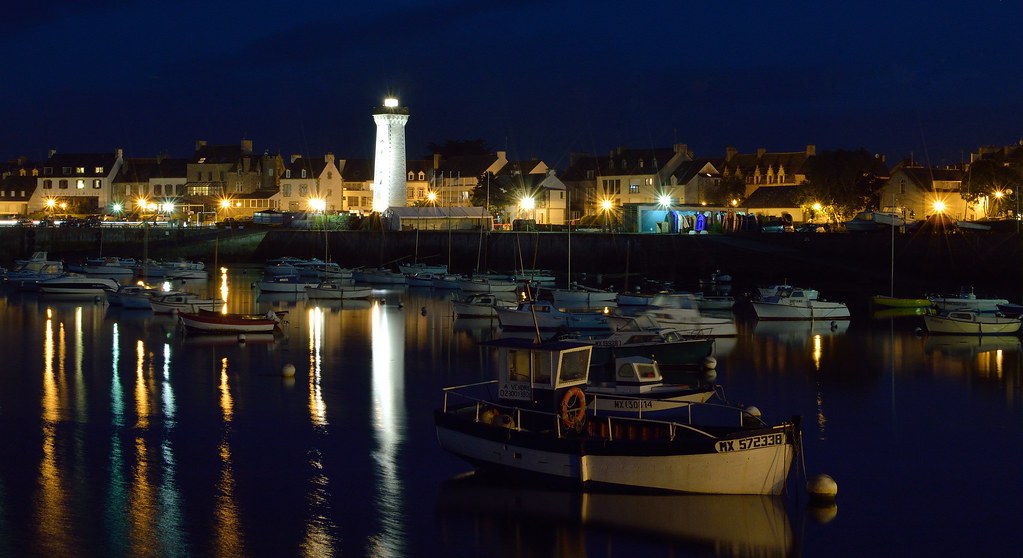
Roscoff Guide, Roscoff at night time

Roscoff — Gateway to Western Brittany

Corsair Old Town | Jardin Exotique | Maison des Johnnies | Île de Batz | Sentier des Douaniers | Morlaix | Toll-free Breton Roads

⚓ Roscoff at a Glance

15 min
Ferry to
Île de Batz
3,400+
Plant species in
Jardin Exotique
Toll-free
Roads through
all Brittany
1km
Port to
old town
  • Roscoff Old Town — Corsair granite streets, 16th-century merchant houses, the Maisons Marie Stuart, and a working fishing harbour — FREE to explore
  • Notre-Dame de Croaz-Batz — Roscoff’s 16th-century Flamboyant Gothic church, completed 1545, with a spectacular Renaissance belfry and carvings of ships on its walls — FREE
  • Jardin Exotique et Botanique de Roscoff — 3,400+ subtropical plant species on an 18-metre clifftop promontory above Morlaix Bay (adults €7 | open 5 March–31 October)
  • Maison des Johnnies et de l’Oignon de Roscoff — The story of the Breton onion sellers who cycled to Britain for a century — guided tours, photographs, period film
  • Île de Batz — Car-free island 15 minutes by ferry, with the Jardin Georges Delaselle botanical garden, a lighthouse with 198-step climb, beaches and coastal path (€11 adults return)
  • Sentier des Douaniers — The coastal path around Roscoff with views to Île de Batz, the Château du Taureau and Morlaix Bay — FREE
  • Château du Taureau Cruise — Morlaix Bay boat trip to Vauban’s 16th-century sea fortress on a rocky islet (adults €21 | selected dates June–September)
  • Roscoff Thalassotherapy — Birthplace of French thalassotherapy (Dr Louis Bagot, 1899), with the Roscoff thalasso centre still operating as a significant wellness destination
  • Plage de Roc’h Kroum — Roscoff’s own town beach with western exposure and Île de Batz views, supervised July–August, Blue Flag standard, diving board and disabled access — FREE
  • Cairn de Barnenez — The largest megalithic burial site in Europe, 15km from Roscoff, 4,500 BC — André Malraux called it the “Prehistoric Parthenon” (adults €7 | under-18s free)
  • Morlaix Day Trip — 30 minutes south: a spectacular two-storey Roman viaduct (1861), preserved half-timbered medieval streets, and good riverside restaurants — FREE to explore

Arriving at Roscoff from Plymouth — First Things to Know

Port de Bloscon is Roscoff’s deep-water ferry terminal — a purpose-built port separated from the old town by about 1km. Most visitors drive straight through and head south, but the old town is a short walk from the port gate and well worth the stop.

🚶 Port to Old Town — 1km Walk

Port de Bloscon is approximately 1km — about 15 minutes on foot — from Roscoff old town. Turn left out of the port gate and follow the coast road into town. Chapelle Sainte-Barbe (1619) sits on the promontory above the port on your left as you walk — the view back over the ferry terminal from its steps is one of the best in Roscoff. The old port and the start of the Vieux Port are straight ahead.

🕐 Tidal Arrival Variation

The Armorique’s overnight arrival time at Roscoff varies by up to one hour due to tidal conditions — unique to this port. Scheduled arrival is 08:00–10:15 local French time (France is one hour ahead of the UK year-round). Don’t plan a tight first morning. Give yourself time to disembark, clear French border control, and let the traffic clear before heading south.

🚌 No Train — Bus to Morlaix

Roscoff no longer has a train station — the line closed in 2018. The nearest railway is at Morlaix, 30 minutes south. BreizhGo bus Ligne 29 connects Roscoff to Morlaix in approximately 35 minutes and allows bicycles on board in July and August. For foot passengers heading south, Morlaix’s TGV station connects to Paris in under 4 hours. By car or motorbike, Brittany’s roads are largely toll-free from the port gate.

🛒 Practical First Stop — Morlaix

Roscoff itself is a small town — if you need a large supermarket, a vet for the return tapeworm treatment, a pharmacy, or a cash machine, Morlaix 30 minutes south is better equipped. Roscoff has a small weekly market (Thursday mornings on the Place Lacaze-Duthiers), good seafood restaurants and bakeries, but Morlaix provides the fuller range of practical facilities before heading deeper into Brittany.

Top Things to Do in Roscoff

Roscoff rewards those who give it time before heading south. Here is everything worth seeing in and around the town, with verified 2026 admission prices.

Roscoff Old Town — The Corsair Quarter

FREE to explore | Walk from port: 1km (~15 min)

Roscoff old town is listed as a Brittany City of Character — a designation that acknowledges genuine architectural and historical distinctiveness rather than tourist-friendly prettiness. Built entirely in local granite, the town reached its apex in the 16th and 17th centuries as a corsair port and trading hub, and its wealth shows in the extraordinary houses lining the old streets. The group of merchant houses at 19–25 Rue Revéillère date from the 16th century and are associated with a romantic story: local tradition holds that the six-year-old Mary Queen of Scots stayed here in 1548 on her way to Paris to marry François II — earning them the name Maisons Marie Stuart.

The church of Notre-Dame de Croaz-Batz, completed in 1545 in the Flamboyant Gothic style, is immediately recognisable: its Renaissance belfry rises above the flat coastal landscape and can be seen from the approaching ferry. The exterior walls are carved with ships — a reminder that this was a church built by and for sailors. Inside, a large decorative altar and ancient ossuary. The small Chapelle Sainte-Barbe (1619) on the promontory above Port de Bloscon is quieter and less visited, but its hilltop position over the harbour is exceptional.

The Thursday morning market on Place Lacaze-Duthiers is the best time to find Roscoff’s famous AOP pink onions alongside fish, cheese, and local produce. Rue Gambetta has the town’s best independent shops — antiques, onion-related products, regional food. The Vieux Port, where fishing boats still work, is the most atmospheric corner of town at any hour.

Plage de Roc’h Kroum is Roscoff’s own town beach — just a short walk from the Vieux Port on Rue Victor Hugo, with a western exposure and direct views across to Île de Batz. The beach is supervised by lifeguards in July and August and holds the Pavillon Bleu (Blue Flag) quality standard. Facilities include a diving board, showers, disabled access (floating wheelchair/tiralo available), toilets, bar and restaurant, and free car parking. At low tide, two natural rock pools also form — both supervised in season. A good option on arrival for families who want to swim before heading south.

Jardin Exotique et Botanique de Roscoff

Adults €7 | Children 8–17 €3 | Under-8 FREE | Open: 5 March–31 October 2026, daily | Mar–Jun & Sep–Oct: 10:00–18:00 | Jul–Aug: 10:00–19:00

Opened in 1987 on a rocky promontory 18 metres above Morlaix Bay, the Jardin Exotique et Botanique de Roscoff is one of the most remarkable botanical gardens in northern France. The garden covers 1.6 hectares and contains over 3,400 plant species from the southern hemisphere and Atlantic islands — South Africa, New Zealand, Chile, Argentina, Brazil, the Canaries, Madeira and the Azores. Acacias, agaves, cacti, echiums, eucalyptus, fuchsias, palms, tree ferns and passionflowers grow in a climate warmed by the Gulf Stream to produce something entirely unexpected this far north. The national collections of eucalyptus and South African bulbs held here are unique in France.

The views from the promontory across Morlaix Bay to Île de Batz — with the ferries crossing below — are outstanding. Each season brings different flowering, so the garden changes significantly between spring and autumn. Allow 1–2 hours. Check jardinexotiqueroscoff.com for 2026 pricing confirmation before visiting.

Maison des Johnnies et de l’Oignon de Roscoff

Admission charged — guided tours only; call ahead as tour times change | Address: 48 Rue Brizeux, Roscoff

This is where the classic British image of the French person — beret, bicycle, strings of onions — was actually born. The Johnnies were Breton onion sellers from the Roscoff area who, from the early 19th century, sailed to Britain and cycled door to door selling strings of pink onions. At their peak in the early 20th century, around 1,400 Johnnies crossed the Channel each year, working routes as far north as Scotland. The last few still operate today, though the trade has largely vanished.

The museum traces the whole story through photographs, period film, testimonies from old Johnnies, and the history of Roscoff’s famous AOP pink onion — certified as an Appellation d’Origine Protégée since 2013, one of only a handful of vegetables in France to hold this status. The annual Fête de l’Oignon de Roscoff, held each August, celebrates the onion with tastings, demonstrations and market stalls. If you’re visiting in summer, it is well worth timing your arrival to coincide.

Sentier des Douaniers — The Coastal Path

FREE | Part of the GR34 long-distance footpath | Distance: variable — short loops from 2km or longer sections towards Plougoulm and the coast

The Sentier des Douaniers — the old customs officers’ path — runs along Roscoff’s rocky coastline with outstanding views across Morlaix Bay to Île de Batz, Château du Taureau, and on clear days towards the Pink Granite Coast to the east. The path forms part of the GR34, one of France’s great long-distance routes that circles the entire Brittany coast. From Roscoff, short sections of 2–3km make a perfect morning walk before the Île de Batz ferry. The stretch west past the lighthouse and Chapelle Sainte-Barbe to the rocky Pointe de Bloscon is the most dramatic — granite outcrops, turquoise water, and views back to the town. Good walking shoes recommended; the path is rocky in sections.

Roscoff Thalassotherapy — Birthplace of French Thalasso

Centre de Thalassothérapie de Roscoff | Various treatments and day packages — check thalasso-roscoff.com for current rates

Roscoff has a specific claim to distinction in the world of wellness: it was here, in 1899, that Dr Louis Bagot established the first thalassotherapy institute in France, following his observations of the curative properties of seawater on the local fishing community. Thalassotherapy — treatment using seawater, seaweed, and sea climate — has been a Roscoff specialism for over 125 years. The town’s seaweed harvesting industry, still active today, feeds into the treatments available at the modern thalasso centre. A half-day treatment package is a remarkable way to recover after a long overnight ferry crossing — and Roscoff’s position on the Gulf Stream gives its seawater particular qualities not found further north.
🏝️ Île de Batz — The Island Ferry from Roscoff

The Île de Batz is 15 minutes from Roscoff harbour by ferry and is one of Brittany’s finest day-trip destinations — a car-free island with a botanical garden, a lighthouse with panoramic views, quiet beaches, a coastal path that circles the entire island, and a pace of life that is entirely its own. The Gulf Stream gives the island an unusually mild microclimate, allowing plants to flourish here that would not survive on the mainland.

The Ferry — Prices, Times & Practical Notes (2026)

Return fares: Adults (12+) €11 | Children 4–11 €7 | Under-4s €2 | Dogs €2 | Bikes €18
Operated by Les Vedettes de l’Île de Batz. No booking required for individuals. No card payments on board — cash or cheque only. Cards accepted at the ticket office on the Vieux Port (April–October).

Season Frequency from Roscoff Rough Hours
July–August (high season) Every 30 minutes 08:00–20:00
April–June & September–October Roughly hourly 08:30–19:00
November–March (winter) 8 departures per day 08:30–18:30 (no 08:30 Sun/holidays)

⚠️ Tidal departure point (works ongoing until 15 June 2026): At high tide, ferries depart from Vieux Port (Quai Parmentier) in the old harbour. At low tide, they currently depart from Port de Bloscon (the ferry terminal) due to infrastructure works — approximately 30 minutes’ walk from the old town. Check the current timetable and departure point at vedettes-ile-de-batz.com before you go, as the low-tide point changes seasonally. After 15 June 2026 this arrangement may change. Always check ahead.

🌿 Jardin Georges Delaselle

The island’s own botanical garden, begun in 1897 by Georges Delaselle, covers 2.5 hectares and contains 2,500+ plant species from around the world. The mild Gulf Stream climate allows plants from the tropics and southern hemisphere to flourish here that would not survive on the Brittany mainland. The garden is at the eastern end of the island — allow 1.5 hours from the ferry landing to reach it and return. A separate admission is charged; check locally for current prices.

🔦 The Lighthouse — 198 Steps

Île de Batz’s lighthouse, built in 1836, rises to a 44-metre lantern room reached by 198 steps. The 360-degree view from the top takes in Morlaix Bay, the Roscoff coastline, Château du Taureau, and on clear days the Pink Granite Coast to the east. Small admission charged. One of the best viewpoints in northern Finistère — and the climb is manageable even for older children.

🚲 Cycling & Walking the Island

Île de Batz is 3.5km long with 12km of paths. The coastal circuit path rings the entire island and is one of the finest short walks in Brittany — beaches, coves, rocky headlands, and constant sea views. Bike hire is available at the harbour from several outlets: standard bikes ~€14/day, electric bikes ~€35/day, family carrioles and tandems also available. No cars mean the paths are genuinely peaceful even in summer.

🏖️ Beaches & Swimming

The largest and best beach is on the northern shore of the island — the Grève Blanche — a broad crescent of sand with clear, shallow water. Several smaller coves are scattered around the coast, most accessible on foot via the coastal path. The water is noticeably warmer here than on the Brittany mainland thanks to the Gulf Stream. Dogs travel free on the ferry and are welcome on most of the island’s beaches.

💡 Day on Île de Batz: Take the 09:00 or 10:00 ferry from Roscoff, walk or cycle to the Jardin Georges Delaselle (1.5 hrs east), have lunch at one of the island’s crêperies in the harbour village, then climb the lighthouse for the view. Return on the 15:30 or 16:30 ferry, leaving time for a drink at the Vieux Port before heading south. Allow a full day. Crêperies and small cafés near the harbour serve galettes, crêpes and local seafood — bring cash as not all accept cards.

Day Trips from Roscoff — Morlaix, Saint-Pol-de-Léon & Morlaix Bay

Roscoff is excellently positioned for day trips into western Brittany. Morlaix is the most important, but Saint-Pol-de-Léon, the Château du Taureau cruise, and the opening miles of the D785 south are all close enough to combine in a single day.

Morlaix — 30 Minutes South

FREE to explore | 30 min by car on D58 | 35 min by BreizhGo bus (Ligne 29) | TGV station: Paris in under 4 hrs

Morlaix is the most rewarding day trip from Roscoff and the most useful practical stop. The town is dominated by its extraordinary two-storey viaduct — built in 1861 to carry the Brest–Paris railway 62 metres above the valley floor. Standing beneath it in the old town square and looking up is one of those unexpectedly powerful moments that Brittany delivers regularly. During daylight hours you can walk the lower level for panoramic views across the town.

The old quarter below the viaduct contains some of the finest medieval architecture in Brittany — the Duchess Anne’s House and the Maison de Pondalez are exceptional examples of the carved half-timbered houses (maisons à pondalez) unique to Morlaix, with their internal wooden staircases rising through several floors. The weekly Saturday market along the river is outstanding: Roscoff onions, Breton cheeses, seafood, cider and local honey. Restaurants cluster in the streets below the viaduct — a good lunch stop before returning to Roscoff or heading south.

⛪ Saint-Pol-de-Léon — 5km East

Just 5 kilometres east of Roscoff, Saint-Pol-de-Léon is worth an hour’s detour for its Gothic cathedral — one of the finest in Brittany — and the remarkable Kreisker chapel, whose 78-metre spire is the tallest in Brittany and modelled on the flèche of Notre-Dame de Paris. The town is the vegetable-growing capital of Finistère: cauliflowers, artichokes, and of course Roscoff onions are grown in the fields around it. Small, easy to park, and typically uncrowded.

⛵ Château du Taureau Cruise

Adults €21 | Children 4–11 €14 | Under-4s €5 | Departs Vieux Port 14:30 | Selected dates June–September 2026. The Château du Taureau is a small fortress built on a rocky islet in the middle of Morlaix Bay, constructed in the 16th century and later modified by Vauban. Les Vedettes de l’Île de Batz run 2-hour Morlaix Bay cruises and 3-hour tours including a guided visit of the castle. Booking: vedettes-ile-de-batz.com. Morlaix Bay is also an exceptional ornithological reserve — the 2-hour cruise passes the Île Louët, Île Noire and Île Callot, home to 50+ species of seabird.

🪨 Cairn de Barnenez — 15km South-East

Adults €7 | Under-18s free | EU residents 18–25 free | Presqu’île de Kernelehen, Plouézoc’h 29252 | ~20 min by car from Roscoff | Free parking. The Cairn de Barnenez is the largest megalithic burial site in Europe — an extraordinary Neolithic monument 70 metres long and almost 8 metres high, containing 11 dolmen chambers, built in stages from around 4,500 BC. André Malraux, on first seeing it, reportedly called it the “Prehistoric Parthenon.” The site stands on a headland above Morlaix Bay with panoramic views across the estuary — the choice of location was deliberate, signalling the power of the community that built it several millennia ago. A partnership between Barnenez and the Château du Taureau means a full-price ticket at one gives a reduced admission at the other — worth knowing if you’re combining both in a day. Open year-round (check barnenez.fr for seasonal hours). Guided tours available at no extra cost, registration on arrival. Dogs not permitted on site.

🛣️ The D785 — Heading South

If you’re not staying in Roscoff and are heading deeper into Brittany, the D58 south to Morlaix connects to the D785 — consistently rated the finest road in northern France. Through the moorland and granite of the Monts d’Arrée, the Parc naturel régional d’Armorique, and south towards the Crozon peninsula, this is the road that makes arriving in Roscoff rather than St Malo worth it. All toll-free. See our Motorbike Touring in Brittany guide or Driving in France from Roscoff for full route detail.

Sample Itineraries — One Day & Two Days in Roscoff

Whether you have a morning after the overnight ferry or a full two days before heading south, Roscoff rewards planning. The Brittany Ferries day-trip itinerary is a good starting point — here we expand on it with verified times, prices and alternatives.

First Morning After the Overnight Ferry

08:00–09:00: Arrive at Port de Bloscon. Let the vehicle traffic clear before driving out. If on foot, walk the 1km to the old town — Chapelle Sainte-Barbe on your left as you go. Head to one of Roscoff’s bakeries or cafés on Place Lacaze-Duthiers for a French breakfast — croissant, café au lait, and the realisation that you are genuinely in France.

09:00–10:00: Wander the old town streets — Rue Gambetta, the Vieux Port, Notre-Dame de Croaz-Batz, the Maisons Marie Stuart on Rue Revéillère. The town is at its quietest and most atmospheric in the early morning before the tourist coaches arrive.

10:00–11:00: Board the Île de Batz ferry from the Vieux Port (or Bloscon at low tide — check current departure point). 15-minute crossing. Spend 2–3 hours exploring: the coastal path, Jardin Georges Delaselle, or the lighthouse.

12:00–13:30: Lunch on the island at one of the crêperies near the harbour. Galette (savoury) followed by a crêpe (sweet) — the classic Breton combination. Bring cash.

14:00: Return ferry to Roscoff. Visit the Maison des Johnnies (guided tour — call ahead), or the Jardin Exotique (open from 10:00), before picking up the D58 south to Morlaix and beyond.

Two Days: Roscoff & Morlaix

Day 1 — Roscoff & Île de Batz: Full day on the island — morning ferry, Jardin Georges Delaselle, lighthouse climb, coastal path walk, crêperie lunch, return afternoon ferry. Evening: Jardin Exotique as it closes at 19:00 in summer, followed by dinner on the Vieux Port. Roscoff has several excellent restaurants specialising in local seafood — monkfish, sea bass and turbot are the specialities.

Day 2 — Morlaix & Château du Taureau: Drive or bus to Morlaix in the morning (30 min). Explore the viaduct, old quarter, Duchess Anne’s House, and Saturday market if it’s the right day. Afternoon: return to Roscoff for the 14:30 Château du Taureau cruise from the Vieux Port (advance booking essential — vedettes-ile-de-batz.com). The 3-hour tour of Morlaix Bay and the castle is one of the finest afternoon excursions in northern Brittany. Return to Roscoff by 17:30. Head south on the D785.

Where to Eat in Roscoff

Roscoff has an excellent restaurant scene for a town of its size — the working fishing harbour supplies local seafood directly to the restaurants on the Vieux Port, and the town’s Breton food traditions are strong. The local specialities are worth seeking out.

What to Eat in Roscoff

Galettes & crêpes — the Breton staple: savoury buckwheat galettes with egg, ham or cheese for a meal; sweet crêpes with butter, sugar and Breton salted caramel for dessert. Seafood — Roscoff specialises in monkfish (lotte), sea bass (bar) and turbot. Fresh local catch on the Vieux Port restaurants daily. Roscoff onion — the AOP pink onion appears in tarts, soups and as a side dish throughout the town. Breton cider — the local alternative to wine, served cold and light. Kouign-amann — Brittany’s extraordinary buttered, caramelised pastry, invented in nearby Douarnenez.

Le Temps de Vivre, Vieux Port

One of Roscoff’s best-regarded restaurants, consistently praised for its fresh local seafood and its position on the Vieux Port waterfront. The menu focuses on what the fishing boats bring in that morning — lotte, turbot, local oysters and shellfish. Expect to book in advance in July and August. Recommended by Lonely Planet and multiple French food guides.

Crêperies — Roscoff & Île de Batz

Roscoff and Île de Batz both have traditional crêperies serving buckwheat galettes and sweet crêpes. On the island, the crêperies near the harbour are the standard lunch stop for day-trippers — simple, good, and usually less expensive than the mainland restaurants. On the mainland in Roscoff, several crêperies operate on the old town streets near the church.

Thursday Market — Place Lacaze-Duthiers

The weekly Thursday morning market in Roscoff is the town at its most local. Roscoff pink onions (AOP), Finistère vegetables, fresh fish from the harbour, local cheeses, Breton cider, and artisan producers from across the Léon region. If your ferry arrives overnight on a Wednesday, Thursday morning in Roscoff is a genuinely enjoyable first French experience.

Roscoff Guide: Frequently Asked Questions

The most common questions about visiting Roscoff — answered with verified 2026 information.

How far is Roscoff from the ferry port?

Roscoff old town is approximately 1km from Port de Bloscon — about 15 minutes on foot. Turn left out of the port gate and follow the coast road. Chapelle Sainte-Barbe (1619) sits on the promontory on your left as you walk in. The Vieux Port and old town centre are straight ahead. By car it is a 2–3 minute drive. The walk is flat and straightforward.

How much is the Île de Batz ferry in 2026?

The Île de Batz ferry return fare is €11 for adults (12+), €7 for children aged 4–11, and €2 for under-4s. Dogs travel for €2. Bikes cost an additional €18 for transport. No booking required for individuals. Cash or cheque only on board — no card payments. Cards accepted at the ticket office on the Vieux Port from April to October. Crossing time is 15 minutes each way. Operated by Les Vedettes de l’Île de Batz.

How much is the Jardin Exotique de Roscoff?

Admission to the Jardin Exotique et Botanique de Roscoff is €7 for adults, €3 for children aged 8–17, and free for under-8s. The garden is open daily from 5 March to 31 October 2026: 10:00–18:00 from March to June and September to October; 10:00–19:00 in July and August. Always verify current prices at jardinexotiqueroscoff.com before visiting as pricing is reviewed annually.

Is there a train from Roscoff?

No — Roscoff’s railway line closed in 2018. The nearest train station is at Morlaix, 30 minutes south by car. BreizhGo bus Ligne 29 connects Roscoff to Morlaix in approximately 35 minutes and accepts bicycles on board in July and August. Morlaix has TGV services connecting to Paris in under 4 hours, and regional trains to Brest, Quimper and Rennes.

What is the best thing to do in Roscoff?

For most visitors, the Île de Batz ferry is the standout experience — a car-free island 15 minutes from the harbour with its own botanical garden, lighthouse, beaches and coastal path. In the town itself, the combination of the Jardin Exotique (open March–October), the Maison des Johnnies, and a wander through the old corsair streets is hard to beat. If you’re visiting in August, the Fête de l’Oignon de Roscoff celebrates the town’s famous AOP pink onion with tastings and market stalls.

Are the roads from Roscoff toll-free?

Yes — Brittany’s road network is largely government-owned and toll-free. From Roscoff, you can drive south through the Monts d’Arrée, west to Brest, or south-west to Crozon and Quimper without encountering a péage. Tolls only begin east of Rennes when you leave Brittany for Normandy, Pays de la Loire or beyond. This toll-free road network is one of the key advantages of arriving at Roscoff rather than further east.

What are the Johnnies of Roscoff?

The Johnnies (Johnnies in Breton: Yannig in French) were Breton onion sellers from the Roscoff area who sailed to Britain from the early 19th century and cycled door to door selling strings of Roscoff’s famous pink onions. At their peak in the early 20th century, around 1,400 Johnnies were working in Britain each year, travelling as far as Scotland. They are the origin of the classic British image of the French person in a beret on a bicycle — the stereotype was based on a real, specific group of people from this one town. The Maison des Johnnies et de l’Oignon de Roscoff tells their story in full.

Continue Planning Your Plymouth to Roscoff Trip

Ferry Information

Timetables, ships, cabins and check-in for the Plymouth to Roscoff crossing

Ferry Guide →

🚗

Driving in France from Roscoff

Speed limits, mandatory kit, toll roads, rules for UK drivers and the best Brittany routes

Driving Guide →

🏍️

Motorbike Touring from Roscoff

The D785, Monts d’Arrée, Crozon peninsula — the best routes from Roscoff and French rules for UK riders

Riding Guide →

🗺️

Plymouth to Roscoff Travel Guide

Journey times from Cornwall, Devon and Wales — and how to get to Plymouth Millbay

Location Guides →

Ready to Book Your Crossing to Roscoff?

Brittany Ferries sails year-round from Plymouth Millbay to Roscoff — arriving in western Brittany on toll-free roads with the Île de Batz, the Jardin Exotique, Morlaix and the whole of Finistère ahead of you. Book early for summer sailings and the Pont-Aven Friday daytime crossing.

Book Plymouth to Roscoff with Brittany Ferries →