Affiliate Disclosure: This site contains affiliate links. If you book through these links we may earn a small commission, at no extra cost to you.
Pink Granite Coast: Complete Day Trip Guide from Roscoff 2026
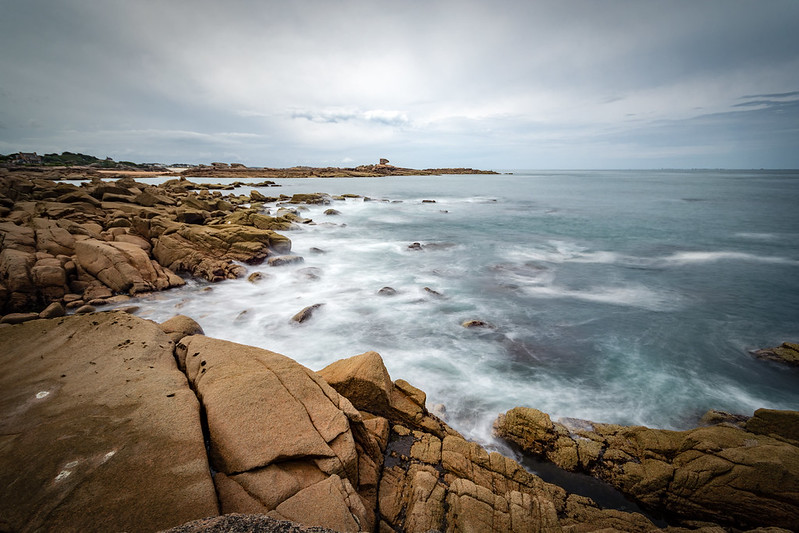
The Pink Granite Coast (Côte de Granit Rose) is one of the most visually extraordinary stretches of coastline in France — a 10-kilometre arc of Brittany’s northern shore where enormous boulders of ancient pink granite have been shaped over 300 million years by erosion into forms that look impossibly deliberate: a tortoise, an elephant, a rocking stone, a bishop’s chair, Napoleon’s hat. The colour comes from the high concentration of feldspar in the rock, which deepens from pale rose to vivid coral depending on the light. In the late afternoon and in the golden hour before sunset, the stone turns a shade that has made this coast one of the most photographed natural landscapes in France.
From Roscoff, the Pink Granite Coast is approximately 70 kilometres east — about 55 minutes on toll-free roads via the N12. The centrepiece is the Sentier des Douaniers: an 8-kilometre return walk along the GR34 coastal path from the beach at Perros-Guirec through the most spectacular granite formations to the fishing harbour at Ploumanac’h, past a lighthouse rebuilt in pink granite after the Germans destroyed the original in 1944, a 12th-century oratory on the beach with a centuries-old tradition of unmarried women pinning needles in the saint’s stone nose, and the spot where Gustave Eiffel built his Breton holiday home. Offshore, the Sept Iles archipelago — the largest seabird reserve on the French coast, home to the only gannet colony in France — is accessible by boat from Perros-Guirec in under two hours.
This complete Pink Granite Coast guide for 2026 covers everything for a day trip from Roscoff: verified driving directions, the walk in full with every landmark described, the Sept Iles boat trip with 2026 prices and an important current works note, Trégastel and Trébeurden as additional stops, and sample itineraries for half-day and full-day visits.
Last updated: May 2026 | All prices, distances and times verified from official sources
55 min from Roscoff | Sentier des Douaniers Walk FREE | Sept Iles Boat Trip €22 Adults | Only Gannet Colony in France | Ploumanac’h Lighthouse | Saint-Guirec Oratoire
✅Sentier des Douaniers Walk — 8km return along the GR34 from Plage de Trestraou in Perros-Guirec to Ploumanac’h harbour, through the most spectacular pink granite formations in France. 2–2.5 hours. FREE.
✅Mean Ruz Lighthouse — the iconic pink granite lighthouse of Ploumanac’h, rebuilt in 1947 from the local stone after the original was destroyed by a German bombardment in 1944. One of the most photographed buildings in Brittany.
✅Oratoire de Saint-Guirec — a 12th-century stone oratory on the beach at Ploumanac’h, with a centuries-old tradition of unmarried women pinning needles into the saint’s nose at the tide’s edge. The view from the beach includes the Château de Costaérès on its tidal islet.
✅Sept Iles Boat Trip — 1h45 guided cruise to France’s largest seabird reserve offshore from Perros-Guirec — the only gannet colony in France, puffins (spring and early summer), grey seals, and the pink granite coast seen from the sea. Adults €22, children €16. FREE under-3s.
✅Castel Meur — The House Between Two Rocks — the most photographed landmark on the coast: a cottage built in 1861 between two granite boulders at Plougrescant. Private residence — visible from the coastal path only, no entry. ~30km east of Perros-Guirec
✅LPO Station, Île Grande — watch the gannet colony live on camera from the land-based Sept Iles visitor centre. Adults €4. Bird rescue centre, interactive museum, wheelchair accessible
✅Trégastel & Trébeurden — beyond Ploumanac’h, Trégastel has a marine aquarium set among the granite rocks themselves, and Trébeurden is a quieter resort at the western end of the coast with outstanding beaches and bay views.
⚠️Sept Iles 2026 note: The 2h30 excursion with a stop at Île aux Moines is currently suspended due to works on the island. Only the 1h45 excursion is running. Check armor-navigation.bzh before visiting for the latest schedule.
Why Is the Granite Pink? The Geology Explained
The pink granite of the Côte de Granit Rose is not a trick of the light or a photographic filter — though the light does intensify it dramatically. The colour is real, consistent, and geological.
300 Million Years in the Making
Granite is composed of three minerals: mica (which contributes dark specks), quartz (which is glassy and pale), and feldspar. Ordinary granite has pale or grey feldspar. The granite of this coast contains an unusually high concentration of potassium feldspar — a form of the mineral that is distinctly pink or salmon in colour. When this granite was formed approximately 300 million years ago — as magma deep beneath the Armorican massif slowly cooled — the feldspar crystallised into the particular shade that gives the coast its name.
The landscape you walk through today was not always a coastal scene. The Armorican massif once contained mountains as high as the Alps. Over hundreds of millions of years, erosion reduced those mountains to the level plain you cross driving from Roscoff, and exposed the granite that was cooling beneath them. The sea then completed the work: wind, waves, salt, ice and rain have sculpted the exposed granite into the extraordinary forms that line this coast — the balancing boulders, the tunnels, the arches, and the named shapes (Elephant Rock, Tortoise Rock, Rocking Stone) that visitors have been photographing since the railway brought fashionable society here in the 19th century. The colour is deepest in the late afternoon light, and most dramatic against the turquoise water at high tide.
Getting to the Pink Granite Coast from Roscoff
The Pink Granite Coast is approximately 70 kilometres east of Roscoff — the furthest of the main day trip destinations covered in this guide, but entirely manageable as a day out.
By Car — 55 Minutes
Distance: ~70km to Perros-Guirec | Drive time: ~55 minutes | Route: D58 south from Roscoff through Saint-Pol-de-Léon, then N12 east toward Lannion, then north on D788 to Perros-Guirec | Tolls: None
Parking: In July and August, parking at the Plage de Trestraou (start of the walk) fills early — arrive before 09:30 or use the Sémaphore car park slightly further along the coastal road and join the walk midway. Ploumanac’h has parking near the port (paid in peak season). Multiple free car parks in Perros-Guirec outside July–August.
Best Approach: Morning is Better
In July and August, the coastal path from Trestraou to Ploumanac’h is one of the most visited walks in northern Brittany. By 11:00 on a summer morning the most scenic sections near Ploumanac’h lighthouse become very busy. Arriving early — at Trestraou beach by 09:00–09:30 — means walking the most beautiful sections while they are relatively quiet, with the morning light on the granite at its softest and most photogenic. If you are combining the walk with the Sept Iles boat trip (which runs from Trestraou beach), check the tide-dependent departure time for the day before planning your timing: the morning departure is typically quieter than the afternoon one.
The Sentier des Douaniers: Walk Guide (Perros-Guirec to Ploumanac’h)
The Sentier des Douaniers — the old customs officers’ path, now GR34 — between Perros-Guirec and Ploumanac’h is consistently described as one of the finest coastal walks in France. Here is every landmark in sequence.
Distance: 8km return (4km each way) | Time: 2–2.5 hours (up to 4 for photographers) | Grade: Easy | Waymarked: GR34 red and white | Cost: FREE | Dogs: On lead (rubber tips on walking poles required)
1️⃣ Plage de Trestraou — Start
Perros-Guirec’s main beach — a long, gently curving bay with the distinctive pink-tinged sand of the granite coast. The beach developed as a fashionable resort in the late 19th century with the arrival of the railway. Colourful traditional beach huts line the promenade. The Sept Iles boat departure point (Gare Maritime) is at the western end of the beach. Begin the walk at the far eastern end, following the GR34 red and white waymarks upward from the beach.
2️⃣ The Sémaphore Viewpoint
A short way along the path, the Sémaphore (signal station) sits on the cliffs above Trestraou, providing the first elevated view along the Pink Granite Coast. This is a practical starting point if Trestraou parking is full — there are car parks near the Sémaphore that allow you to join the walk without missing any of the most spectacular sections.
3️⃣ Pors Rolland Cove — Where it Gets Spectacular
This is the point where the granite formations become truly extraordinary. The small beach at Pors Rolland is surrounded by vertiginous piles of pink boulders, some of them balanced at apparently impossible angles over the water. Some appear to be perched on each other rather than embedded in solid ground. This is the beginning of the most dramatic section of the walk — the area of the “chaos granitique” (granite chaos) that makes the Pink Granite Coast unlike anywhere else in France.
4️⃣ Mean Ruz Lighthouse — Ploumanac’h
The lighthouse at Ploumanac’h — the Phare de Mean Ruz (also written Phare de Men Ruz; “men ruz” is Breton for “red stone”) — is the iconic image of the Pink Granite Coast and the visual climax of the walk. What makes it unique is that it is built entirely from pink granite — the same rock that surrounds it. This is not coincidence: the lighthouse was deliberately rebuilt in local stone after the original (built in 1860 in grey granite) was destroyed by a German bombardment in 1944. The pink granite version, completed in 1947, blends into its rocky setting so naturally that photographs of it have become among the most reproduced images of Brittany. The Maison du Littoral, a small coastal nature exhibition, is located beside the lighthouse.
5️⃣ Plage de Saint-Guirec & the Oratoire
The path descends to the beautiful Plage de Saint-Guirec — a sandy beach at Ploumanac’h with a view across the bay to the Château de Costaérès on its tidal islet, built in neo-Gothic style in 1896. On a rock in the bay stands the Oratoire de Saint-Guirec — a 12th-century stone oratory marking the spot where Saint Guirec, a Welsh monk, is said to have arrived on this shore in the 6th century. The oratory has a curious tradition: unmarried women who wish to be married within the year come to the beach at low tide and pin a needle into the nose of the saint’s granite statue. If the needle remains until the next tide, the marriage will come. The tradition continues today. Look out also for the “Chapeau de Napoléon” (Napoleon’s Hat) — a distinctive mushroom-shaped granite formation used as a code word by the local Resistance during the Second World War. Gustave Eiffel, whose most famous creation in iron needs no introduction, built a holiday villa at this beach — it is visible on the right as you face the water.
6️⃣ Port de Ploumanac’h — End (France’s Favourite Village 2015)
The walk ends at the small fishing harbour of Ploumanac’h — a former fishing hamlet that was voted Village préféré des Français (France’s Favourite Village) in 2015 on the popular France 3 television programme. It is easy to see why: the combination of the pink granite harbour walls, the working fishing boats, the lighthouse visible across the water and the extraordinary rock formations surrounding the village make it one of the most immediately beautiful small settlements in northern Brittany. A handful of seafood restaurants line the quay (Restaurant des Rochers is the most recommended with views over the harbour). The Parc des Sculptures Christian Gad in the village contains 18 contemporary granite sculptures commissioned specifically for the town — a pleasant 20-minute loop if you have time. From here, most walkers return along the same coastal path (the views are just as good in the opposite direction); alternatively the Vallée des Traouïero inland return route through a wooded valley with enormous rock formations provides a completely different character and avoids retracing the same ground.
🌿 Vallée des Traouïero — The Inland Return Route
Rather than returning along the coastal path, many walkers complete a loop by taking the Vallée des Traouïero route inland from Ploumanac’h back to Perros-Guirec. The valley is a complete contrast to the coast — a lush, wooded gorge with enormous granite formations emerging from dense vegetation, rich in birds and completely different in character from the wind-swept coastal section. The full loop adds approximately 30–45 minutes to the walk. Ask at the Ploumanac’h tourist point for the current waymarking and any updates to the path.
Sept Iles Boat Trip — Prices, Times & 2026 Update
The Sept Iles (Seven Islands) archipelago sits 7 kilometres offshore from the Pink Granite Coast and is one of the finest wildlife experiences in northern France — consistently described by visitors as a highlight of a Brittany trip.
⚠️ Important 2026 Update — Île aux Moines Works
The 2h30 excursion that includes a 40-minute stop on Île aux Moines is currently suspended due to ongoing works on the island (confirmed armor-navigation.bzh, March 2026). Only the 1h45 excursion — a full circuit of the archipelago without landing — is operating. Check armor-navigation.bzh for the latest before booking, as this may change during the 2026 season.
Departure: Gare Maritime, Plage de Trestraou, Perros-Guirec. Also from Trégastel and Ploumanac’h in summer.
Season: Daily June–September | Demand and weather outside this period
Prices verified from perros-guirec.com official tourism listing. Dogs €5. Arrive at the Gare Maritime 30 minutes before departure. Commentary in French; English multilingual leaflets available on board. Booking recommended — especially in July and August. Arrive early to secure upper-deck seating for best wildlife views.
What You’ll See on the Sept Iles Boat Trip
The Sept Iles archipelago has been a protected bird sanctuary since 1912 and a Réserve Naturelle since 1976. It is the largest seabird reserve on the French coast — and it contains a statistic that makes it unlike anywhere else in France.
🦅 The Only Gannet Colony in France
On the steep slopes of Île Rouzic — the most northerly of the Sept Iles — the only breeding colony of northern gannets in all of France makes its home. Over 21,000 pairs nest here, making Rouzic one of the most significant gannet colonies in Europe. The sight of these large white seabirds — wingspan up to 1.8 metres, diving at speeds of over 100km/h — circling above the island and plunging into the sea is consistently described by visitors as one of the most remarkable wildlife spectacles in northern France. The boat circles close enough to see and photograph the colony clearly. Landing is forbidden — which is exactly why the birds have thrived here.
Also on the islands: approximately 40 grey seals living permanently in the reserve (sightings not guaranteed but frequent), plus 27 nesting species of seabird including puffins, guillemots, razorbills, European shags, cormorants, oystercatchers, kittiwakes and black-headed terns. The best time for puffins is spring and early summer — the colony of around 180 pairs (once nearly extinct; protected since 1912) nests in burrows and is most visible from the boat from April to July.
🐦 Best Season for Wildlife
April–July: Best for puffins — the colony is nesting, birds visible at burrow entrances. Gannets also present in large numbers from March through October. July–August: Gannets at peak colony size — 21,000+ pairs. Seabird activity at maximum. Also dolphin sightings (several TripAdvisor reviews mention dolphins following the boat). March–October: Grey seals resident year-round, most reliably seen in quieter spring and autumn departures.
🔭 Practical Tips for Wildlife Viewing
Bring binoculars — the boat gets close but not within a few metres of the nesting birds. A camera with a zoom lens is strongly recommended. Book online in advance and arrive early to secure upper-deck seats — the wildlife views from the top are significantly better than inside. Wear a windproof layer even on warm days — the boat can be breezy at speed. Commentary is in French; English multilingual leaflets are available on board — take one before departure.
More to See: Trégastel, Trébeurden & Beyond
Beyond the Perros-Guirec to Ploumanac’h section, the Pink Granite Coast continues west to Trégastel and Trébeurden, and east to Lannion and Tréguier. Here are the best additional stops.
🐠 Trégastel Aquarium
Just west of Ploumanac’h, Trégastel has a marine aquarium set uniquely inside a cave formed by the granite rocks themselves — one of the most atmospherically situated aquariums in France, with the stone walls and ceilings of the cave as the structure. Displays cover the marine life of the local coast. Check trégastel-tourisme.fr for current 2026 prices and opening hours before visiting, as the aquarium operates seasonally. Well suited to families with younger children as a rainy-day or afternoon supplement to the coastal walk.
🦅 LPO Ornithological Station — Île Grande, Pleumeur-Bodou
Adults €4 | Children 3–17: €3 | Under-3 FREE | Île Grande, Pleumeur-Bodou (between Trégastel and Perros-Guirec) | Wheelchair accessible. If you cannot get on the Sept Iles boat — or want to learn more before or after the cruise — the LPO (Ligue pour la Protection des Oiseaux) visitor centre on Île Grande is the land-based home of the Sept Iles reserve. The centrepiece is a live video feed from the camera installed on Île Rouzic, broadcasting the gannet colony in real time. The museum also has a diorama recreating a cliff face with 110 bird models, interactive displays on the marine ecosystem, and a bird rescue centre (from outside the aviary you can watch recovering birds). The station was created in 1984 following devastating oil spills — Amoco Cadiz, Torrey Canyon — that killed thousands of seabirds and nearly wiped out the local puffin colony. It now treats approximately 1,000 injured birds per year. Hours: Jul–Aug: 10:00–13:00 and 14:30–19:00 (closed Sat/Sun mornings) | Jun/Sept/school holidays: 14:00–18:00 daily. Prices verified from petitfute.co.uk.
🏖️ Trébeurden
At the western end of the Pink Granite Coast proper, Trébeurden is a quieter, less crowded resort town with outstanding beaches — Tresmeur and Porz Mabo in particular — and a headland with views across to Île Milliau (a tidal island accessible on foot at low tide) and the bay. The pink granite formations continue here but are less dramatic than the Ploumanac’h section. Trébeurden is an excellent late-afternoon stop if you are returning to Roscoff and want to add a final beach before the drive back.
🏠 Castel Meur — The House Between Two Rocks
One of the most photographed and searched landmarks on the entire Pink Granite Coast, Castel Meur is a small stone cottage built in 1861 between two enormous granite boulders at the Pointe du Château, Plougrescant — approximately 30km east of Perros-Guirec, near Tréguier. The house was built with its back to the sea for protection from Atlantic storms, using the two huge rocks on either side as natural windbreaks. Also known as “La Maison du Gouffre” (House of the Chasm), it became so famous — immortalised on postcards sold across Brittany — that over-tourism became a serious problem: tourists climbed on the roof and damaged the property. The owner went to court and won: the house’s image can no longer be used commercially. It is a private residence — visitors cannot enter or approach the property. It can be seen from the coastal path between the Pors Scaff car park and the nearby sea chasm (Le Gouffre), a 20-minute walk. Pair it with nearby Plougrescant’s curious chapel of Saint-Gonéry, which has a distinctly crooked lead spire.
🏛️ Lannion — 15km South
Lannion is the nearest significant town to the Pink Granite Coast — a pleasant historic town with half-timbered medieval houses on Place du Général Leclerc and the unusual Brélévenez quarter, where a 12th-century Templar church stands at the top of 142 steps with views over the valley. Good restaurants for lunch. Practical stop for a supermarket or pharmacy before returning to Roscoff. About 15 minutes south of Perros-Guirec on the D788/N12.
⛪ Tréguier — Medieval Cathedral City
30 kilometres east of Perros-Guirec, Tréguier is one of the most beautifully preserved medieval cathedral cities in Brittany — a quiet, authentic, barely-touristed town with a magnificent Gothic cathedral (begun 1339), half-timbered houses on the cathedral square, and the birthplace of Ernest Renan (author of Vie de Jésus). Combining Tréguier with the Pink Granite Coast makes for a genuinely rich full day, with the coast in the morning and the cathedral city in the afternoon before heading back to Roscoff.
Sample Itineraries from Roscoff
The Pink Granite Coast rewards a full day, but a half-day visit still delivers the essential walk. Two options.
Half Day — Walk Only (4–5 Hours)
Perfect for: Those wanting the signature Pink Granite Coast experience without a full day
08:00: Depart Roscoff — 55 min drive to Perros-Guirec
09:00: Park at Plage de Trestraou. Coffee at a beachfront café.
09:30–12:00: Walk the Sentier des Douaniers to Ploumanac’h (2–2.5 hrs). Pors Rolland, Mean Ruz lighthouse, Saint-Guirec beach, oratoire, Napoleon’s Hat.
12:00–13:00: Lunch at Restaurant des Rochers, Ploumanac’h harbour
13:00: Return along coastal path or Vallée des Traouïero (~1.5 hrs)
14:30: Return to Roscoff (~55 min). Or continue to Trégastel for the afternoon.
Full Day — Walk + Sept Iles + Tréguier
Perfect for: The complete Pink Granite Coast experience — coast, wildlife, medieval town
Start early: The Sentier des Douaniers is one of the most popular walks in northern Brittany. In July and August, the section near the Mean Ruz lighthouse is very busy by 11:00. Arriving at Trestraou by 09:00–09:30 gives you the best formations in relative quiet and the best morning light on the granite.
Book the Sept Iles boat in advance: Armor Navigation departures sell out in peak summer, especially morning slots. Book online at armor-navigation.bzh the day before or earlier. Check the current departure schedule when booking — times vary and the website publishes the weekly programme each Saturday.
The colour is best in late afternoon: The pink granite reaches its deepest colour in the 2–3 hours before sunset. If you are combining the Sept Iles morning boat with an afternoon walk, you will hit the best light on the rocks at the perfect moment.
Bring water and snacks for the walk: There are no refreshments between Trestraou beach and Ploumanac’h harbour on the coastal path. Restaurants are available at Ploumanac’h. Fill up before you start.
Try the Vallée des Traouïero return: Most walkers return along the same coastal path. Those who take the Vallée des Traouïero inland route get a completely different landscape — a wooded valley with enormous granite formations and rich birdlife. Adds 30–45 minutes but is well worth it if you have time.
Sept Iles 2026 — check before you go: The 2h30 excursion (with a stop on Île aux Moines) is currently suspended. Only the 1h45 circuit is running. This may change during the season — check armor-navigation.bzh before booking.
Pink Granite Coast: Frequently Asked Questions
How far is the Pink Granite Coast from Roscoff?
The Pink Granite Coast is approximately 70 kilometres east of Roscoff — about 55 minutes by car via the D58 south through Saint-Pol-de-Léon then the N12 east toward Lannion, then north to Perros-Guirec on the D788. All roads are toll-free. It is the furthest of the main Roscoff day trip destinations but entirely manageable as a full day.
How much is the Sept Iles boat trip in 2026?
The standard 1h45 circuit of the Sept Iles with Armor Navigation costs €22 for adults (12+), €16 for children aged 3–12, and is free for under-3s. Dogs travel for €5. The 2h30 excursion with a stop on Île aux Moines costs €24.50/€17 but is currently suspended (2026) due to works on the island — check armor-navigation.bzh before visiting. Book at armor-navigation.bzh or by phone on 02 96 91 10 00. Departs from Gare Maritime, Plage de Trestraou, Perros-Guirec. Prices verified from perros-guirec.com official tourism listing.
How long is the Sentier des Douaniers walk at Ploumanac’h?
The Sentier des Douaniers between Perros-Guirec (Plage de Trestraou) and Ploumanac’h harbour is 8 kilometres return — 4km each way. It takes 2 to 2.5 hours at a comfortable pace with stops for photographs and views, though photographers often spend 3–4 hours on the route. The walk is graded easy, free, well-marked with GR34 red and white waymarks, and suitable for children who can walk 4km at a stretch. Dogs are welcome on a lead.
Why is the granite pink?
The pink colour comes from an unusually high concentration of potassium feldspar — a pink-hued mineral — in the local granite. Granite is formed from three minerals: mica (dark), quartz (pale and glassy), and feldspar. When this particular granite cooled from magma approximately 300 million years ago, its feldspar crystallised with more potassium than usual, producing the distinctive colour. The shade deepens in low-angle sunlight — late afternoon and golden hour light make the rock appear most intensely pink. Erosion over millions of years has sculpted the exposed granite into the extraordinary rounded and balanced shapes that line the coastal path.
Can you see puffins at the Sept Iles?
Yes — the Sept Iles has a colony of approximately 180 pairs of Atlantic puffins. The best time to see them is spring and early summer (April to early July), when the birds are nesting and most visible from the boat. By high summer most puffins have returned to open ocean. The Sept Iles is also home to the only northern gannet colony in France (21,000+ pairs on Île Rouzic) and around 40 permanently resident grey seals. Book the morning departure at armor-navigation.bzh for the best wildlife conditions.
More Day Trips from Roscoff
🌊
Carantec Day Trip
Ile Callot tidal island, Penn al Lann coastal walk, Maritime Museum and Château du Taureau views
Book Your Ferry to Roscoff — Gateway to the Pink Granite Coast
Brittany Ferries sails year-round from Plymouth Millbay to Roscoff. Drive 55 minutes east on toll-free roads and you are on one of the most extraordinary stretches of coastline in France — where the rocks have been pink for 300 million years.
This website uses cookies to improve your experience. If you continue to use this site, you agree with it.
We use cookies to ensure that we give you the best experience on our website. If you continue to use this site we will assume that you are happy with it. We also use affiliate links, please see our privacy policy.