Seasickness on the Plymouth to Roscoff Ferry: What to Expect and How to Prepare

Worried about seasickness before your Plymouth to Roscoff crossing? You’re not alone — it’s one of the most common questions from first-time travellers on this route. The good news: most crossings are calm, and there’s a lot you can do before and during your journey to minimise the risk. This guide covers when to travel if you’re prone to motion sickness, where to sit or stay onboard, and practical steps to feel your best. Wondering how rough the crossing generally is? See our guide: Is Plymouth to Roscoff a Rough Crossing?

Last updated: July 2026 | General travel guidance only — always speak to a pharmacist or doctor for medical advice specific to you or your family.
Seasickness Plymouth to Roscoff Guide

Seasickness — At a Glance

Low & Midship
Best deck position for minimal motion
Spring/Summer
Generally the calmer sailing months
8–11 hrs
Overnight crossing length — most of it spent asleep
Onboard
Basic remedies available at the ship’s boutique/shop

This is an open-Channel crossing, longer than short hops like Dover–Calais — a fair question to ask before you travel.

Check Prices & Availability →

How Rough Is the Plymouth to Roscoff Crossing, Really?

The Plymouth to Roscoff route crosses open water across the western English Channel, which makes it a longer and more exposed crossing than short hops like Dover–Calais. That said, “open water” doesn’t mean “rough water” — most sailings are perfectly comfortable, especially in spring and summer. Large ferries like the Armorique and Pont-Aven are large, stable vessels built for Channel crossings, and their size alone means gentle swells are barely noticeable most of the time. Genuinely rough conditions are the exception rather than the rule, and Brittany Ferries will delay or reschedule sailings in advance of forecast severe weather rather than sail into it.

Best Time of Year to Cross If You’re Prone to Seasickness

If motion sickness is a real concern for you, timing your crossing can make a genuine difference. Late spring through early autumn (roughly May to September) tends to bring calmer sea conditions on this route, while autumn and winter crossings are more likely to encounter swell from Atlantic weather systems. This isn’t a guarantee — any crossing can occasionally be choppy — but it shifts the odds meaningfully in your favour. As a bonus, these calmer months often overlap with shoulder-season pricing rather than peak summer rates — see our prices and booking guide for how fares change through the year.

Day Crossing vs Overnight Crossing: Which Is Easier on Seasickness?

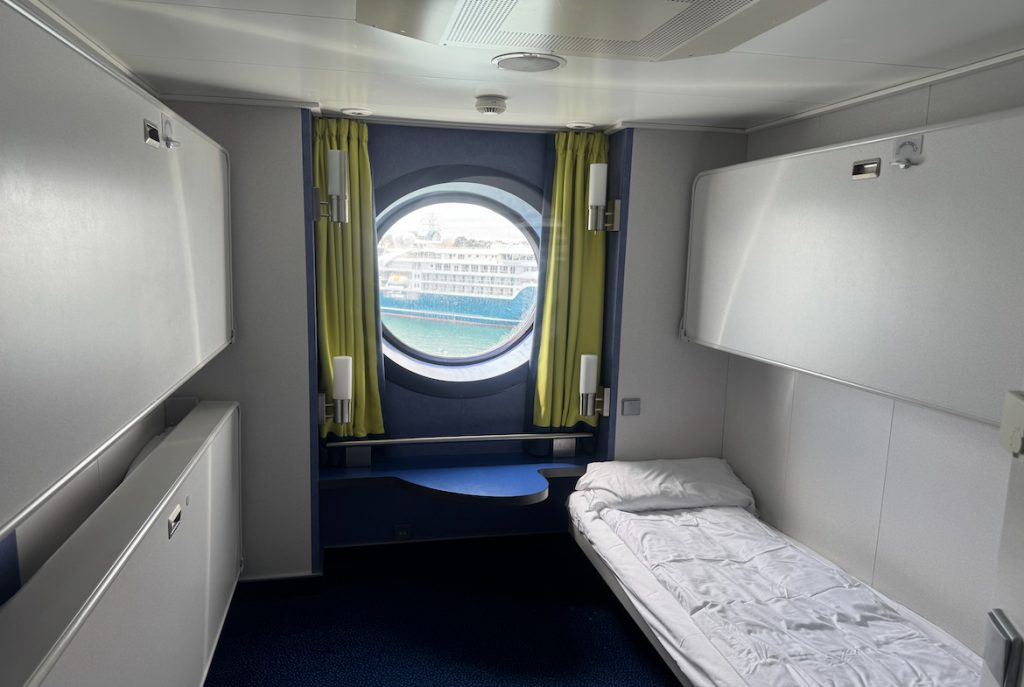
There’s no single right answer here — it depends on how your body responds. A daytime crossing lets you stay on deck, watch the horizon, and move around freely, which helps many people avoid symptoms altogether. An overnight crossing means you can go straight to your cabin and sleep through most of the journey — if you’re asleep, you’re generally not aware of motion. Lying down itself tends to help too: it reduces the amount of conflicting movement your eyes and inner ear are processing compared with standing or sitting upright. The trade-off is that lying down in a windowless inside cabin can worsen symptoms for some people if they do wake up feeling off. If you know you’re sensitive to motion, consider booking an outside cabin with a window for a visual horizon reference — see our cabins guide for the full range of options on both ships.

From Our Crossings

We always book a cabin, whatever time of day we’re sailing, and it’s made a real difference for us over the years. Lying down and settling in properly seems to help far more than sitting upright in a lounge seat. We’ve also found that the overnight crossing is genuinely easier — you naturally drift off to sleep, and the crossing is more or less over by the time you wake up. It’s become our default choice on this route.

Where to Sit or Stay Onboard to Minimise Motion

Where you are on the ship makes a real difference to how much motion you feel.

✅ Lower, Midship Cabins

The point of least motion on any ship. If you’re prone to seasickness, a lower-deck cabin near the middle of the vessel (rather than the bow or stern) is the best choice.

✅ Outside Deck, Fresh Air

If you start to feel unwell, heading outside to a rear or midship deck, facing the horizon, is one of the most effective quick remedies — see our onboard facilities guide for deck access on both ships.

❌ Avoid: Bow, Stern, and Upper Decks

Motion is most exaggerated at the front, back, and top of the ship. Avoid lingering in these areas if you’re feeling at all unsteady.

❌ Avoid: Reading or Screens Below Deck

Focusing on a book, phone, or laptop while the ship is moving is one of the most reliable ways to trigger symptoms. Save screen time for when you’re settled and feeling fine.

Practical Tips to Prevent Seasickness

A little preparation before you board goes a long way.

✓ Eat Lightly Beforehand

A heavy or greasy meal right before boarding can make things worse. Aim for something light and plain a couple of hours before departure, and avoid boarding on a completely empty stomach either.

✓ Stay Hydrated, Skip the Alcohol

Dehydration and alcohol both make motion sickness more likely and more severe. Water is your friend on this crossing, even on an evening sailing.

✓ Get Fresh Air Early

Spending some time on deck in the first hour, rather than heading straight below, helps many people acclimatise to the ship’s motion.

✓ Keep Your Eyes on the Horizon

A fixed, distant visual reference helps your inner ear and eyes agree on what’s moving — one of the simplest and most effective techniques.

✓ Consider Ginger

Ginger biscuits, ginger tea, or ginger sweets are a popular, gentle option many travellers find helpful before and during the crossing.

✓ Ask a Pharmacist in Advance

Over-the-counter travel sickness remedies (tablets and acupressure bands) are widely available. Speak to a pharmacist before your trip for advice suited to you — especially for children, pregnant travellers, or if you take other medication.

What to Do If You Start Feeling Seasick Onboard

1
Move to Fresh Air — Head to an outside deck, ideally midship, and get away from enclosed, warm spaces. Fresh air alone resolves mild symptoms for many people.
2
Fix Your Eyes on the Horizon — Find a stable, distant point to look at. Avoid looking down, avoid reading, and avoid your phone screen.
3
Sip Water, Small Amounts — Staying hydrated helps, but take small sips rather than large gulps.
4
Find a Crew Member if You Need Help — Onboard staff are used to this and can point you to a quiet space or offer basic guidance. The ship’s boutique/shop also stocks basic travel sickness remedies if you didn’t bring your own.

Travelling With Kids or Pets Who Get Seasick

Children can be more prone to motion sickness than adults, so the same principles apply — fresh air, a horizon view, light snacks rather than a heavy meal, and avoiding screens. Bring a favourite blanket or toy to help them settle if they head to the cabin to rest. Speak to a pharmacist in advance about child-appropriate remedies. Pets travelling in the vehicle or a pet-friendly cabin can also feel unsettled by motion — keeping them calm, comfortable, and not overfed before boarding helps. Our travelling with kids guide and pet travel guide have more on preparing younger or four-legged travellers for the crossing.

Seasickness on the Plymouth to Roscoff Ferry: Frequently Asked Questions

How common is seasickness on this route?

Most passengers have no issues at all, especially on calmer spring and summer sailings. It affects some people more than others regardless of conditions, which is why preparation — cabin position, timing, and the tips in this guide — makes a real difference regardless of how smooth the crossing turns out to be. For more on general sea conditions on this route, see Is Plymouth to Roscoff a Rough Crossing?

Do ferry cabins help with seasickness?

They can, especially if you sleep through the crossing. A lower-deck, midship cabin has the least motion. An outside cabin with a window gives you a horizon view if you wake feeling unsettled, which can help more than a windowless inside cabin.

Can I get seasickness tablets onboard?

The onboard boutique/shop typically stocks basic travel sickness remedies, but stock isn’t guaranteed. It’s best to speak to a pharmacist and bring what you need before you travel, especially for children or if you take other medication.

Is the overnight crossing calmer than daytime?

Sea conditions themselves don’t depend on time of day, but many travellers find the overnight crossing easier simply because they sleep through most of it. Daytime crossings suit people who prefer to stay on deck and watch the horizon.

Do seasickness tablets actually work?

Pharmacies sell several types of motion sickness remedy — tablets, patches, and acupressure bands — and a pharmacist can recommend the right one for you or your child. According to NHS guidance, tablets and patches are established options, though acupressure bands don’t work for everyone. As with any medication, speak to a pharmacist before you travel, particularly for children, pregnant travellers, or if you take other medication, since suitability and dosing vary by age and individual circumstances.

Source: NHS — Motion Sickness

More Plymouth to Roscoff Guides

🛏️

Cabins Guide

Choose the right cabin, deck, and position for a comfortable crossing

Cabins Guide →

🚢

Onboard Facilities

Decks, dining, and where to find fresh air onboard

Facilities Guide →

⏱️

Timetables

Day vs overnight sailing times throughout the year

Timetables →

💰

Prices & Booking

Seasonal pricing and how far ahead to book

Prices Guide →

Ready to Book Your Plymouth to Roscoff Ferry?

Foot passenger from £38 · Car + 2 passengers from £117 · Reserved seat from £10 or cabin from £55 for overnight crossings

Check Prices & Availability →

Leave a Reply

Your email address will not be published. Required fields are marked *

Fill out this field
Fill out this field
Please enter a valid email address.
You need to agree with the terms to proceed